


- kunal
- Agricultural Digital Marketing, Agricultural Marketing Company, Agricultural Marketing Strategy, Agricultural Product Branding, Agriculture Marketing Agency, Digital Marketing Agency for Agriculture
- 0 Comments
- 416 Views
Agriculture is no longer marketed only through dealers, field visits, trade fairs and word-of-mouth recommendations.
Those channels still matter. But before a buyer calls a salesperson or speaks to a distributor, there is a good chance they have already searched online.
They may check a product website. Look for specifications. Watch a demonstration. Compare two suppliers. Read about a problem they are facing. Or simply search the product name to find out whether the company behind it is credible.
That has changed what marketing needs to do.
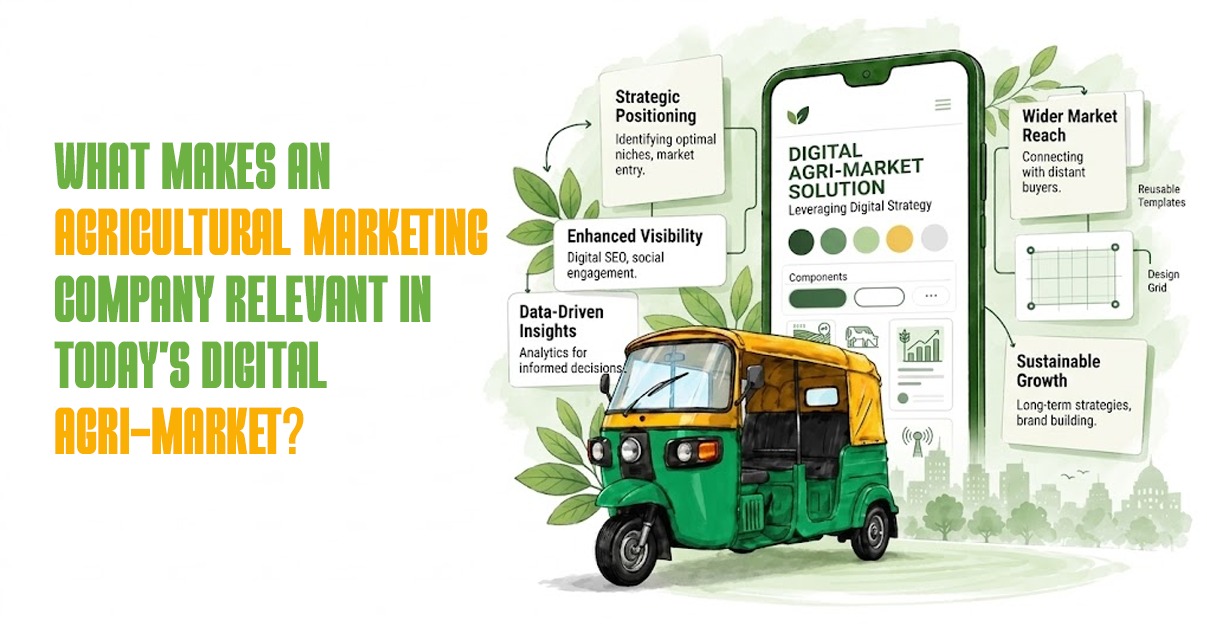
An Agricultural Marketing Company today has to do more than promote a product. It needs to help people find the right information, make technical products easier to understand, and give potential buyers a reason to continue the conversation.
The interesting part is that agriculture does not need marketing that feels overly polished or disconnected from the field. It needs communication that is useful, specific, and easy to trust.
How is Agricultural Marketing Changing?
The biggest shift is not that agriculture has suddenly become a digital industry.
It is that the buying journey has become less predictable.
A farmer might hear about a product from a local dealer and then search for it online. A distributor might receive a supplier introduction and check the company’s website before replying. A procurement manager might compare several manufacturers before requesting a quotation.
The first interaction can happen almost anywhere.
This is why modern agriculture marketing has to work across different stages of the decision process. A social post may create familiarity, while a product page provides the details. A search result may answer an early question, while a case study gives a potential buyer more confidence.
Good marketing connects these moments instead of treating them as unrelated campaigns.
It also means that agricultural brands have to think carefully about the language they use.
A product may be technically excellent, but if its website uses complicated language that a customer cannot quickly understand, much of that value gets lost.
Why an Agricultural Marketing Company Needs to Understand the Product
Agricultural products can be surprisingly difficult to market.
A fertiliser, irrigation solution, seed variety, farm machine or crop protection product may involve technical specifications that cannot simply be reduced to a catchy slogan.
At the same time, giving customers a page full of technical terminology is not always helpful either.
The real skill lies somewhere between the two.
A good agricultural marketing company should be able to ask:
- What does the product actually solve?
- Who uses it?
- What problem usually leads someone to consider it?
- Which questions come up before purchase?
- What makes the product different?
- What proof can support its claims?
- What does a dealer or salesperson usually have to explain?
These questions produce much better marketing material than starting with, “What should we post this week?”
When marketing teams understand the product first, the communication becomes more believable.
How Digital Marketing Helps Agriculture Brands
So, how digital marketing helps agriculture brands is not simply a question of getting more followers.
Its bigger role is helping customers find useful information when they are researching.
Consider a buyer who searches for a particular agricultural product without knowing which company to choose.
A useful website can answer the basic questions immediately:
- What is the product?
- What is it used for?
- Who is it meant for?
- How does it work?
What are its specifications?
How can someone request more information?
That information can turn a vague search into a meaningful business conversation.
This is where agricultural digital marketing becomes valuable. SEO, product content, videos, social media, paid campaigns, and landing pages can each support a different part of the buyer journey.
The objective is not to force every visitor into an enquiry.
Sometimes the first win is simply giving them a clear answer.
What Makes an Agriculture Marketing Strategy Work?
A useful agriculture marketing strategy starts with people, not platforms.
Before deciding whether LinkedIn, Google, Instagram or email should receive most of the budget, a brand needs to know who it is trying to reach.
A farmer may want practical information.
A distributor may care about margins, availability and product demand.
A procurement team may want specifications, certifications and supply capability.
A dealer may need simple material that can be shared with customers.
One message rarely works equally well for all four.
That does not mean creating completely different brands for different audiences. It means changing the depth, language, and format of the information.
A good strategy keeps the central product story consistent while making the communication useful to the person reading it.
How to Market Agricultural Products Online
The answer to how to market agricultural products online depends heavily on what is being sold and who makes the buying decision.
For a technical B2B product, a strong website may be more important than a large social following.
For an agricultural consumer product, visual content and e-commerce information may carry more weight.
For machinery, demonstration videos can explain things that several paragraphs cannot.
For specialised inputs, detailed product pages and educational content may be essential.
A sensible online setup usually includes:
- Clear product and category pages
- Helpful answers to customer questions
- Search-friendly content
- Product demonstrations where relevant
- Technical documents or specifications
- Strong enquiry or contact options
- Social content that supports the wider product story
The point is not to copy what another agriculture brand is doing.
It is to make your own buying process easier.
Digital Marketing Agency for Agriculture: Where It Can Add Value
A digital marketing agency for agriculture needs to understand that the sector cannot always be marketed like fashion, food delivery, or consumer electronics.
The sales cycle may be longer. Distribution may be regional. Technical claims may require careful review. Several people may influence the final purchase.
That changes the marketing approach.
Search campaigns can capture people who already have a requirement. Content can answer early research questions. Social media can keep the brand familiar. Video can demonstrate practical use. Remarketing can reconnect with people who visited important product pages.
None of these activities has to work alone.
A potential customer might first see a LinkedIn post, visit the website a week later, search the company name, and finally contact a distributor.
If the experience is consistent throughout that journey, the marketing is doing its job.
How Agri Businesses Build Online Visibility
A common mistake is assuming online visibility means ranking for one broad keyword.
It rarely works that way.
People search in many different ways.
Someone may search for a product category. Another person may search for a specific application. Someone else may ask a question about a problem the product solves.
That creates an opportunity for agricultural brands to build useful content around real customer questions.
For example, a company selling agricultural equipment could create pages around product types, applications, maintenance questions, comparisons, and buying considerations.
This approach gives search engines more context about the business while giving potential customers genuinely useful information.
It also supports AI-driven search experiences, where a system may pull information from several parts of a website to answer a more specific question.
Clear headings, concise answers, factual product information, and well-connected pages all help.
Agricultural Product Branding Is More Than a Logo
Agricultural product branding is sometimes treated as a visual exercise.
A new logo is created. Colours are selected. Packaging is updated.
But branding becomes much more important when a customer starts researching.
- Does the website sound like the same company as the sales brochure?
- Does the product page explain the product in the same way the dealer does?
- Do social posts reinforce the same positioning?
- Can a buyer quickly understand what the company stands for?
These details create brand recognition.
For agricultural companies, consistency is particularly useful because customers may encounter the business through several people and channels before making a decision.
The visual identity matters, but so does the language.
A strong agricultural brand should sound like itself.
How Agriculture Brands Reach Modern Buyers
The question of how agriculture brands reach modern buyers has become more complicated because there is no single buyer journey.
A distributor may find a supplier through search.
A farmer may discover a product through a video.
A procurement manager may receive a recommendation and then verify the company online.
A dealer may share a product page through WhatsApp.
Each route is different.
That is why a brand should not measure its digital activity only by clicks or followers.
A better question is whether the marketing is helping people move forward.
- Did they find the product information they needed?
- Did they spend time on a relevant page?
- Did they download a technical document?
- Did they contact sales?
- Did a dealer receive a better-qualified enquiry?
These are much closer to the actual business value of digital marketing.
Digital Marketing Strategies for Agriculture That Feel Useful
The most practical digital marketing strategies for agriculture are often not complicated.
They begin with information customers already need.
Build pages around real product questions.
Instead of writing generic articles, answer questions customers regularly ask sales teams.
Make product pages stronger.
A product page should not make visitors hunt for basic information. Put the important details where they can be found quickly.
Use video where demonstration matters.
If a machine, process, or application is difficult to explain with words, show it.
Give sales teams content they can use.
A useful product guide or landing page can support a salesperson long after a campaign ends.
Create content for different stages.
Someone discovering a problem needs different information from someone comparing two suppliers.
Connect paid and organic activity.
Paid campaigns can bring targeted traffic, while useful organic content can continue attracting relevant visitors over time.
The right mix depends on the business. There is no universal agricultural marketing formula.
Why Agricultural B2B Marketing Needs a Different Rhythm
Agricultural B2B marketing often involves several conversations before a deal happens.
A manufacturer may sell through distributors. A distributor may work with dealers. A dealer may then speak with the end customer.
That chain creates more opportunities for information to become unclear.
Marketing can help keep the product story consistent.
Technical information can be explained on the website. Product benefits can be turned into sales material. Frequently asked questions can become content. Case studies can provide context.
This also creates a useful feedback loop.
If the sales team repeatedly answers the same question, marketing has found a content opportunity.
If prospects keep misunderstanding a product feature, the website may need clearer wording.
If customers compare the product with a particular alternative, a comparison or explainer page may be useful.
Real customer conversations are often the best source of marketing ideas.
How Agricultural Companies Build Product Awareness
How agricultural companies build product awareness is not simply about repeating the product name.
People remember products when they understand what they are for.
That is why the same product can be presented through different formats without repeating the same message.
A short video might show the product in use.
A social post might address one common question.
A website page can provide technical information.
A case study can show how the solution was applied.
A sales presentation can bring the information together for a specific prospect.
The message stays connected, but the experience changes.
That is much more natural than publishing the same promotional statement across every channel.
What a Modern Agricultural Marketing Company Should Actually Bring
The value of an Agricultural Marketing Company is not the number of services listed on its website.
It is the ability to connect those services to a real business problem.
A company may need better product communication rather than more posts.
Another may need stronger search visibility.
A growing manufacturer may need brand positioning before spending heavily on advertising.
A distributor-focused business may need lead generation and sales support.
The marketing partner needs to identify that difference.
Sociostreet, for example, can bring creative, digital, SEO, social media and strategy capabilities into the same broader marketing conversation. For an agricultural brand, this kind of joined-up approach can help keep product messaging consistent across different channels.
The important part is not using every available service.
It is choosing the activities that solve the actual problem.
Where Agricultural Marketing Is Heading
Agriculture is not abandoning traditional marketing.
Dealers still matter. Sales representatives still matter. Trade shows still matter. Personal relationships still matter.
Digital marketing sits alongside those channels.
The difference is that customers now have more control over the information-gathering stage.
They can research before talking to anyone.
They can compare suppliers without making a phone call.
They can check a company’s credibility in minutes.
They can revisit product information whenever they need it.
That makes useful digital communication part of the overall customer experience.
An Agricultural Marketing Company that understands this shift can help brands become easier to find and easier to evaluate without making their communication sound artificial or overly promotional.
The strongest agricultural marketing will probably not be the loudest.
It will be the marketing that answers the right question at the right moment.
And for brands selling complex products, that can make a meaningful difference.
FAQs
How is agricultural marketing changing?
Agricultural marketing is becoming more connected to digital research. Buyers can now check products, suppliers, specifications, and reviews before speaking with sales teams or dealers. Traditional relationships still matter, but online information increasingly influences the early stages of a purchase.
How does digital marketing help agriculture brands?
How digital marketing helps agriculture brands comes down to making useful information available before the sales conversation. Search, websites, video, social media, and paid campaigns can introduce products and answer common questions.
How to market agricultural products online?
To answer how to market agricultural products online, start with strong product pages, useful educational content, search visibility, and clear enquiry options. Demonstration videos and social content can add value where the product benefits from visual explanation.
What are digital marketing strategies for agriculture?
Useful digital marketing strategies for agriculture include SEO, product-focused content, paid search, social media, video, email, and lead-generation campaigns. The right combination depends on the product, audience, sales cycle, and distribution model.
How do agri businesses build online visibility?
For how agri businesses build online visibility, focus on the questions buyers actually search for. Product pages, application-based content, technical explainers, FAQs, and well-connected website pages can create more useful search visibility than publishing generic articles.
How do agriculture brands reach modern buyers?
How agriculture brands reach modern buyers depends on their audience. Search, websites, social platforms, video, dealers, distributors, and sales teams can all contribute. The goal is to make information available wherever the buyer begins researching.
What does digital marketing for agri businesses include?
Digital marketing for agri businesses can include SEO, websites, content marketing, paid advertising, social media, email, video, and lead generation. A good plan connects these activities rather than treating each channel as a separate project.
How do agricultural companies build product awareness?
How agricultural companies build product awareness starts with explaining the product clearly. Brands can combine product pages, demonstrations, educational content, social posts, and sales material so customers encounter the same core message in different formats.
What does an agriculture marketing agency do?
An agriculture marketing agency can help with positioning, content, creative communication, SEO, digital campaigns, social media, and lead generation. The most useful role is translating a company’s product expertise into communication that customers can act on.
How can an Agricultural Marketing Company support an agri-business?
An Agricultural Marketing Company can help an agri-business clarify its message, improve product communication, build online visibility, and support sales with useful content. Sociostreet is one example of a marketing partner that brings strategy, creative, and digital capabilities together for brands.