


- kunal
- Advertising for Agriculture Brands, Agriculture Advertising, Agriculture Advertising Agency, Agriculture Advertising Agency in India, Campaign Performance
- 0 Comments
- 8 Views
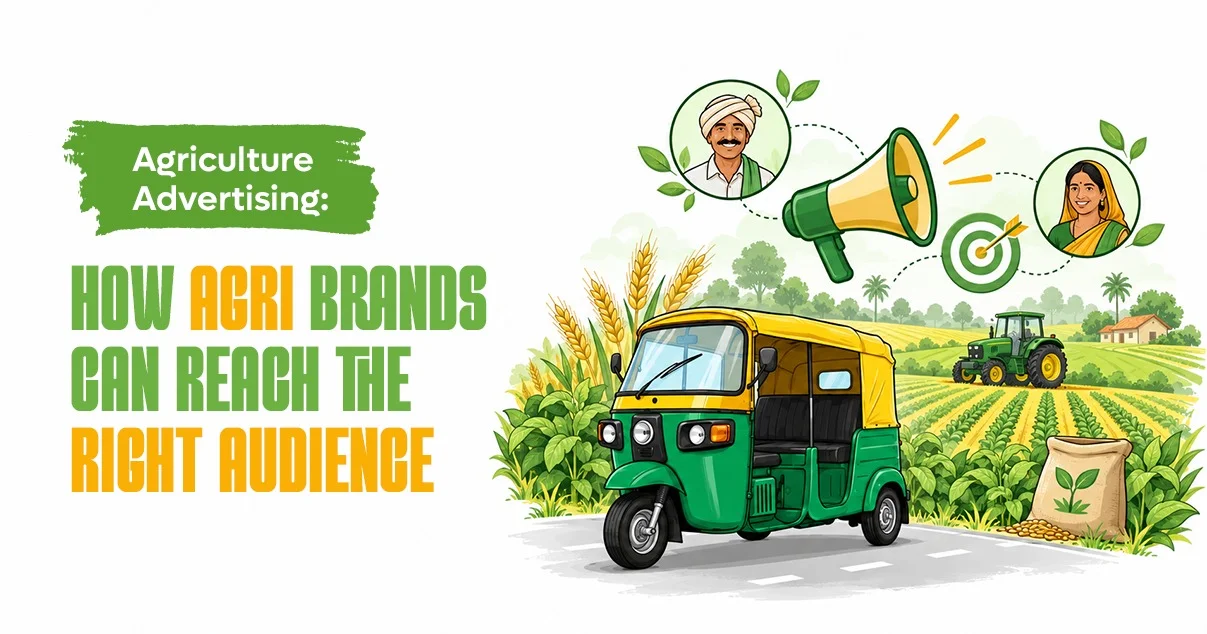
Agriculture brands often have a more complicated marketing challenge than consumer-facing businesses. Their audiences range from farmers and agricultural dealers to distributors, retailers, farm equipment buyers, and large agribusinesses. Each group has different priorities, buying cycles, and reasons to trust a brand.
A farmer comparing crop protection products may want practical information about application, suitability, and results. A distributor, meanwhile, may care more about margins, product availability, demand in a particular region, and support from the manufacturer. Using the same message for both audiences can waste advertising spend without generating meaningful enquiries.
Agriculture Advertising works best when brands understand these differences and connect the right message with the right audience through relevant channels. That means combining regional knowledge, audience research, useful content, and measurable campaigns instead of simply increasing reach.
For agri businesses looking to grow in competitive markets, the real opportunity is to make advertising more relevant to the people who influence or make purchasing decisions.
Why Agriculture Brands Need a Different Advertising Approach
Agriculture is shaped by local conditions, seasonal demand, regional languages, and practical purchasing considerations. Marketing that works for an urban consumer product may not deliver the same results for agricultural inputs, machinery, irrigation systems, or farm technology.
Consider a company promoting drip irrigation equipment. A campaign focused only on product features might attract attention, but prospective buyers may also want to understand installation requirements, water-use considerations, maintenance, and after-sales support. Those concerns should influence both the advertising message and the landing page.
Effective campaigns begin with three questions:
- Who needs the product? Identify the people who use it, purchase it, recommend it, or distribute it.
- What influences their decision? Consider price, reliability, product suitability, availability, service, and evidence of performance.
- Where can the brand reach them? Choose channels according to audience behaviour, location, and purchase intent.
This approach helps businesses spend their budgets on meaningful interactions rather than chasing impressions alone.
1. Identify the Right Audience Before Spending on Ads
The first step in Agriculture Advertising is audience segmentation. Agricultural markets are not a single audience, and campaigns should reflect the differences between customer groups.
For example, an agricultural equipment manufacturer may need to reach individual farmers, farm owners, dealers, institutional buyers, and regional distributors. Each group needs a different reason to respond.
Farmers and farm owners
Focus on practical benefits, suitability for local conditions, ease of use, availability, and access to product guidance.
Dealers and retailers
Highlight dealer support, product demand, supply reliability, training, and opportunities to discuss distribution.
Agribusinesses and institutional buyers
Emphasise specifications, operating requirements, service arrangements, scalability, and documented performance.
Brands should also account for crop types, regional demand, farm sizes, and the buying season where these factors affect product suitability. These details make audience targeting more useful than broad demographic assumptions.
Before launching a campaign, speak with sales teams and dealers, review existing customer enquiries, and examine which products sell in which regions. These sources often reveal practical audience insights that advertising platforms cannot provide on their own.
2. Choose Advertising Channels That Match Buying Behaviour
Not every platform serves the same purpose. Some channels help brands introduce a product to a new audience, while others capture demand from people already looking for a solution.
A balanced media plan considers where the audience spends time and what action the campaign needs to generate.
| Channel | Best suited for |
|---|---|
| Google Search Ads | Reaching people actively searching for agricultural products, suppliers, or solutions |
| YouTube | Product demonstrations, explainers, field videos, and educational campaigns |
| Facebook and Instagram | Regional awareness, short videos, community engagement, and lead generation |
| Enquiry follow-ups, dealer communication, and sharing useful product information with consent | |
| Trade publications | Reaching dealers, distributors, agronomists, and agricultural decision-makers |
| Outdoor and local media | Supporting regional awareness near relevant markets, retail outlets, and agricultural hubs |
The channel mix should depend on the product and campaign objective. A company selling precision farming software may benefit from search advertising, webinars, and demonstrations. A seed brand launching a seasonal product may need regional video campaigns, dealer materials, and local activations.
Where agriculture digital advertising fits in
Digital channels allow brands to adjust campaigns by geography, language, audience signals, and performance. They can also test different messages without committing the entire budget to one creative approach.
For example, a machinery company could test one advertisement focused on ease of maintenance and another highlighting operating efficiency. Comparing qualified enquiries, not just video views, would help the company identify which message attracts more relevant prospects.
However, digital targeting has limits. Platform audience categories do not always identify actual farmers or agricultural decision-makers accurately. Brands should validate targeting through enquiry quality, sales feedback, and campaign results.
3. Localise the Message for Regional Markets
India’s agricultural market varies considerably across states and districts. Crop patterns, weather, farming practices, languages, and access to dealers can all affect how a product is understood.
A national campaign can maintain consistent branding while adapting its communication to local conditions.
For instance, a company selling irrigation equipment may focus on water management in one market and installation support in another, provided these messages accurately reflect the product’s capabilities and the audience’s needs.
An effective localisation process includes:
- Using the language preferred by the intended audience.
- Showing crops, equipment, and farming environments relevant to the target region.
- Adapting examples and product explanations to local use cases.
- Checking translations with people who understand local terminology.
- Directing prospects to dealers or support teams who can serve their area.
This is where an agriculture advertising agency in India can help brands coordinate regional campaigns while maintaining consistent product messaging.
Translation alone is rarely enough. A message should sound natural, explain the product accurately, and give the audience a practical reason to respond.
4. Create Useful Content Instead of Relying Only on Promotions
Agricultural purchases often involve research and consultation. Buyers may compare specifications, ask dealers for advice, review product demonstrations, or seek recommendations before committing.
Brands can support this process with content that answers real questions.
Useful formats include:
- Product demonstration videos showing how equipment operates.
- Crop-specific explainers that clarify relevant product applications.
- Dealer interviews addressing common customer questions.
- Guides comparing product features, maintenance needs, and suitability.
- Frequently asked questions covering availability, support, and usage.
- Case studies documenting results under clearly described conditions.
Content should explain what a product does, who it is suitable for, and where its limitations may matter. Agricultural claims about yield, pest control, water savings, or profitability should be backed by appropriate evidence and presented without guarantees that the evidence cannot support.
This content also creates opportunities for organic search visibility. A well-structured page that answers a specific question can serve users arriving through Google Search and may be eligible to appear in AI-generated search experiences.
5. Build Campaigns Around Agricultural Seasons
Timing can influence campaign performance as much as the message itself. Demand for seeds, crop protection products, irrigation equipment, and harvesting machinery may change throughout the year.
Brands should plan campaigns around the relevant crop calendar, local growing conditions, purchasing lead times, and dealer inventory. These schedules vary by region, so a single national calendar may not be appropriate.
A practical seasonal plan might include three stages:
- Before the buying window: Introduce the product, educate the audience, and help buyers understand their options.
- During the buying window: Increase relevant reach, promote availability, and direct interested buyers to dealers or sales teams.
- After the purchase: Share usage guidance, maintenance information, support resources, and opportunities for feedback.
Seasonal planning also helps brands prepare creative assets, regional translations, stock information, and landing pages before demand peaks.
6. Measure Leads and Business Outcomes, Not Just Reach
A campaign with deep impressions can still underperform if it attracts the wrong audience. For agricultural brands, meaningful results may include dealer enquiries, product demonstrations booked, distributor applications, qualified phone calls, or visits to participating retail outlets.
The right measurement framework should connect advertising activity with business outcomes.
Track metrics such as:
- Click-through rate and cost per click.
- Qualified leads and cost per qualified lead.
- Calls, WhatsApp enquiries, and dealer-locator interactions.
- Conversion rates by region, language, and campaign.
- Lead-to-sale progression, where the sales team can provide reliable data.
- Assisted conversions and changes in branded search demand.
Use campaign-specific landing pages, trackable phone numbers where appropriate, and consistent lead records to connect online activity with offline sales. For dealer-led businesses, ask sales teams to record where enquiries originated and whether they developed into genuine opportunities.
The result is a clearer picture of which audiences and channels contribute to growth, rather than relying on surface-level engagement figures.
7. Work With a Partner Who Understands Both Marketing and the Market
Agricultural campaigns require coordination between creative, media buying, content, regional adaptation, and lead management. A campaign may reach the intended audience but still struggle if its message is unclear or the enquiry process is difficult to complete.
An agriculture advertising agency should be able to explain how it will identify the audience, select channels, adapt messaging, allocate budget, and evaluate results. It should also understand the difference between farmer acquisition, dealer recruitment, product awareness, and B2B lead generation.
For brands comparing partners, ask to see relevant campaign examples, the metrics used to assess performance, and how the team handles regional targeting. A clear testing and reporting process is more valuable than a promise of guaranteed reach or sales.
Sociostreet can be considered by agri brands looking for an integrated approach to creative communication, digital campaigns, and audience-focused marketing. The important thing is to choose a strategy that fits the product, the region, and the business objective—not simply the largest available advertising package.
8. What a Practical Agriculture Advertising Plan Looks Like
A strong campaign connects audience research, relevant messaging, suitable channels, and measurable outcomes. These elements should work together rather than operate as separate marketing activities.
Before launch, establish the campaign objective, define the regions and audience segments, prepare suitable creative variations, and decide how enquiries will be tracked. During the campaign, review lead quality and adjust targeting or messaging where results justify a change.
A structured approach to Agriculture Advertising helps businesses understand which messages attract attention, which channels generate qualified demand, and where marketing budgets are contributing to business growth.
For brands planning to expand into new agricultural markets, consistency matters: test carefully, use credible information, and let actual audience response guide the next decision.
FAQs
What is Agriculture Advertising, and why is it important for agri brands?
Agriculture Advertising is the promotion of agricultural products, services, and solutions through channels such as search engines, social media, video, trade publications, and local media. It helps agri brands reach relevant buyers, explain product benefits, generate enquiries, and support dealer or distributor networks.
How can an agriculture advertising agency in India help a business reach farmers?
An agency can research target regions, identify relevant audience segments, develop local-language creative, select suitable advertising channels, and measure campaign results. The strategy should reflect the product, farming calendar, and availability of local dealers rather than treating all farmers as one audience.
Which advertising channels work best for agricultural product marketing?
Google Search Ads can reach people actively researching products, while YouTube and social media can support awareness and product education. Trade publications, dealer promotions, and local activations can complement digital campaigns. The best mix depends on the audience and the campaign objective.
How can agricultural brands target farmers by location and language?
Start with priority districts, relevant crops, customer profiles, and preferred languages. Develop regionally appropriate messages and test them on suitable platforms. Review enquiry quality and sales feedback to confirm whether the targeting is reaching the intended audience.
What should businesses look for when choosing agriculture advertising services?
Look for audience research, regional campaign planning, suitable creative production, transparent reporting, lead tracking, and experience with the relevant agricultural category. A good provider should explain how campaign performance will be measured and how the results will influence future decisions.
How does agriculture digital advertising generate qualified leads?
It connects product messaging with relevant audiences through search ads, social media, video, and landing pages. Clear calls to action, accessible enquiry forms, dealer information, and timely follow-ups can help convert interest into qualified leads. Lead quality should be assessed alongside cost and volume.
When should agricultural brands launch seasonal advertising campaigns?
Campaigns should be planned around the relevant regional crop calendar and customer buying cycle. Awareness and education may begin before the main purchasing window, with stronger conversion activity when products are available and buyers are ready to act.
How can advertising for agriculture brands improve dealer enquiries?
Campaigns can direct interested buyers to local dealers, provide location-specific contact information, and promote product demonstrations or availability. Tracking calls, dealer-locator activity, and enquiries by region helps businesses understand whether advertising is generating useful sales opportunities.
How can Sociostreet support an agricultural brand’s advertising strategy?
Sociostreet can be explored for creative and digital marketing support, including campaign communication and audience-focused advertising. Agricultural businesses should align the proposed services with their needs, whether those involve awareness, regional reach, lead generation, or dealer engagement.
How can businesses measure the ROI of agriculture advertising campaigns?
Compare campaign costs with qualified leads, dealer enquiries, conversions, and attributable revenue where reliable sales data is available. Use tracking links, campaign-specific landing pages, and consistent lead records. For longer sales cycles, also monitor assisted conversions and lead progression over time.