


- kunal
- brand consistency across marketing channels, brand design strategy, brand design system benefits, creative brand design, design system vs one-off design, social content, website
- 0 Comments
- 540 Views
A brand can have a great logo, a polished website, and impressive campaigns and still feel inconsistent. The problem is often not creativity. It is the lack of a repeatable structure behind that creativity.
As a business grows, more people create content, more platforms need attention, and more customer touchpoints appear. A social post may come from one designer, a sales deck from another, and a campaign from an outside agency. If everyone starts from scratch, the brand slowly becomes a collection of disconnected pieces.
That is why a creative brand design approach built around a system matters. A system gives teams a shared visual language: what should stay recognizable, what can change, and how the brand should adapt to different situations.
What Is a Creative Brand Design System?
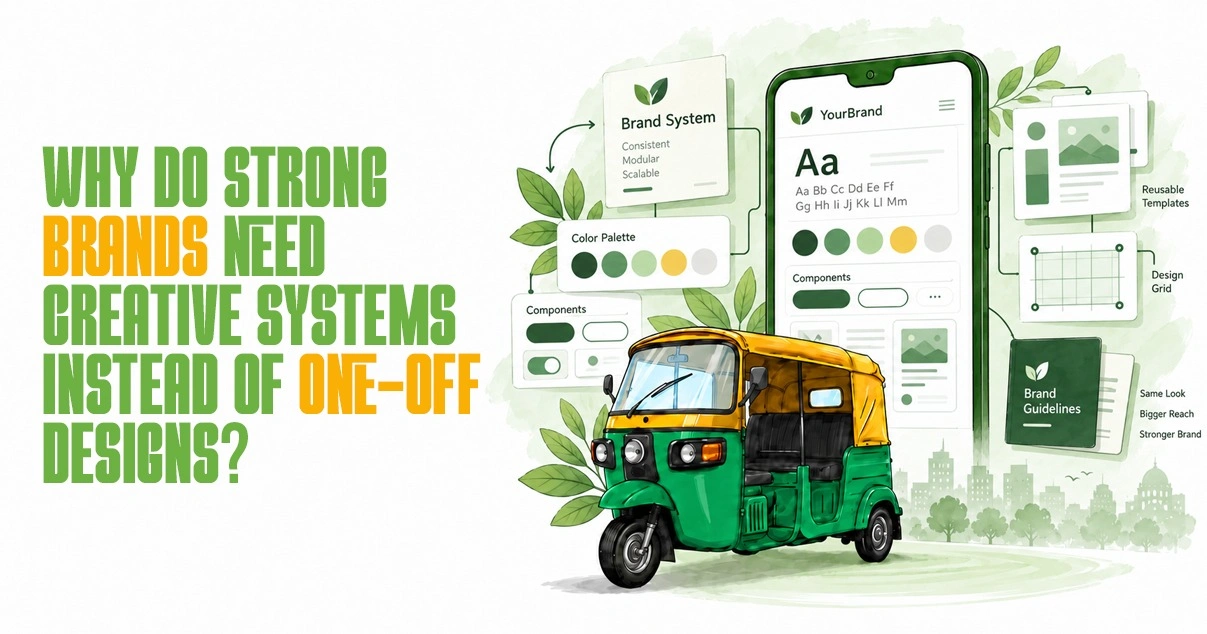
A creative brand design system is a set of connected principles, assets, components, and rules that guide how a brand communicates across formats.
It can include typography, colors, photography, illustration, iconography, layouts, motion, templates, and content principles. The exact mix depends on the business. The purpose is to make strong creative decisions easier to repeat.
A useful system is not a huge rulebook. It is a framework. It establishes the recognizable parts of the identity while leaving designers enough freedom to respond to different campaigns, audiences, and channels.
A website, social post, presentation, package, and billboard should not look identical. They should, however, feel as though they belong to the same brand.
Design System vs One-Off Design: What Changes?
One-off design starts with the immediate request: “We need a banner for this campaign.”
A system starts one level higher: “How should this type of communication express the brand?”
With one-off work, designers repeatedly decide which font, colors, image style, spacing, layout, and graphic treatment to use. With a system, many of those decisions have already been considered.
That does not make the work less creative. It removes unnecessary guesswork, giving designers more time to focus on the idea, message, and execution.
The real difference is that one-off work optimizes an individual asset, while a system creates a repeatable method for producing many assets. In other words, design system vs. one-off design is not really a choice between creativity and structure. It is a question of whether the business wants each project to stand alone or contribute to a larger brand language.
Why Brand Consistency Matters as a Business Grows
Early-stage companies can sometimes manage design informally. There may be one founder, one designer, and only a few marketing materials.
Growth changes that.
More campaigns mean more assets. More employees mean more interpretations. More agencies mean more creative voices. More channels mean more formats to manage.
Without a shared framework, small differences accumulate. Colors drift. Typography changes. Photography starts feeling unrelated. Social content develops a different personality from the website.
None of these issues is disastrous on its own. Together, they weaken recognition.
Brand consistency is not about making every asset look identical. It is about making the brand recognizable when the format, message, or campaign changes.
That becomes especially important for brand consistency across marketing channels. Customers may discover a company through search, encounter it on social media, visit the website, receive an email, and later see an advertisement. Each interaction should reinforce the same underlying identity.
The Practical Benefits of a Brand Design System
The most useful brand design system benefits go beyond aesthetics. They show up in everyday work.
Faster production
When core decisions are defined, teams do not reinvent the visual language for every request. Templates and reusable components make routine work quicker and more predictable.
This matters when a marketing team is producing dozens of assets every month. Instead of debating basic design decisions repeatedly, the team can spend its time improving the actual communication.
Easier collaboration
A shared system gives designers, marketers, copywriters, developers, and agencies a common reference.
Instead of subjective feedback such as “make it feel more like us,” teams can discuss typography, composition, imagery, spacing, or tone. That makes review cycles clearer and reduces unnecessary back-and-forth.
Easier scaling
A growing company should not depend on one designer remembering every decision. A documented system helps new employees and external partners understand the identity faster and reduces unnecessary variation.
This is particularly useful when several people are producing content simultaneously.
Stronger recognition
Repeated visual cues help people connect different communications to the same business.
Over time, recognizable typography, imagery, colors, layouts, or graphic elements can become associated with the brand itself. That recognition is difficult to build when every campaign starts with an entirely new visual direction.
More creative freedom
This sounds counterintuitive, but clear boundaries can make creative work easier.
Once basic decisions are settled, designers can spend more energy on concepts, storytelling, and campaign ideas. A good system creates guardrails, not handcuffs.
Creative Systems for Brands Need Flexibility
One common mistake is treating consistency as sameness.
If every post uses the same composition and every campaign follows the same template, the brand can become predictable.
Good creative systems for brands define relationships rather than one fixed appearance.
For example, a system might establish a type hierarchy, color palette, photography direction, graphic shapes, and spacing principles. Designers can combine those elements differently depending on the job.
A product launch can feel energetic. A thought-leadership article can feel editorial. A recruitment campaign can feel warmer and more conversational.
The identity stays recognizable without forcing every communication into the same visual box.
That flexibility is important because brands rarely communicate in one environment anymore. A design that works beautifully on a website may need a completely different composition for a mobile screen or a physical advertisement.
The system should adapt to the medium while protecting the recognizable characteristics of the brand.
Build the Brand Design Strategy Before the Templates
A strong system starts with strategy, not a pile of templates.
Ask:
- What should people immediately associate with the brand?
- What makes the business different?
- Which visual characteristics already have recognition?
- Where does the current identity feel inconsistent?
- Which channels produce the most content?
- Who will use the system?
- Where should designers have freedom?
These answers shape the brand design strategy.
Next, define the core assets: typography, colors, photography, illustration, iconography, layout, motion, and content principles. Then create reusable components around real business needs.
If the marketing team creates daily social content, social components matter. If sales relies on presentations, build presentation components. If the product team manages a digital interface, connect the brand identity to that experience.
A system becomes useful when it reflects how the company actually works.
It should solve real problems rather than exist simply because every modern brand is expected to have a design system.
Create a Creative Workflow for Consistent Branding
A practical creative workflow for consistent branding can be simple.
Start with a clear brief covering the audience, objective, message, channel, and desired action.
Then identify the relevant system components. Choose the appropriate type styles, imagery, layout approach, and graphic elements.
After that, develop the creative idea. This is where designers should interpret the brief rather than simply fill in a template.
Finally, review the work against two questions:
Does it solve the communication problem?
Does it still feel connected to the brand?
That last check matters. Consistency should support communication, not replace it.
A useful system also makes room for exceptions. A major campaign, product launch, or cultural moment may need something visually distinctive. The question is not whether the design looks different. The question is whether it still feels intentional and connected to the brand.
Why Sociostreet’s System Thinking Matters
For a creative partner, the goal should not be to leave a client with hundreds of disconnected files. The goal is to create a framework that makes future decisions easier.
Sociostreet can apply this thinking by connecting campaign-level creativity with long-term recognition. Instead of treating every deliverable as an isolated assignment, the work can share visual principles, reusable components, and clear creative direction.
The outcome is not simply a larger asset library. It is a more dependable way to produce work.
That distinction becomes increasingly important as brands grow. A collection of files tells a team what has already been designed. A working system helps the team understand how to create what comes next.
Brand Guidelines and a Design System Are Different
Brand guidelines usually explain the rules of an identity: logo use, colors, typography, imagery, tone, and other standards.
A design system goes further by turning those principles into reusable building blocks, components, patterns, templates, and workflows.
Put simply, guidelines explain the brand; a system helps people use it repeatedly.
A practical brand identity system can therefore sit between strategy and execution. It translates the thinking behind the identity into decisions that designers and marketing teams can actually use.
For larger teams, having both guidelines and a system can be useful. The guidelines protect the identity, while the system helps teams apply it efficiently.
When Should a Brand Build a Creative System?
There is no magic company size at which a system becomes necessary.
A practical signal is friction.
Maybe different teams are producing noticeably different work. Maybe campaigns need too many revisions. Maybe agencies interpret the identity differently. Or perhaps the company has expanded from one channel to several and the original guidelines no longer cover what the team actually needs.
You also do not need to build everything at once.
Start with the highest-volume, highest-impact touchpoints. If social media represents a large part of the marketing workload, start there. If presentations and sales materials are constantly being recreated, build those components first.
Test the system in real projects, learn where it breaks, and expand it as new needs appear.
The best systems are usually refined through use. They become stronger when designers discover what works in real situations rather than trying to predict every possible scenario in advance.
Final Thoughts
A one-off design can solve today’s communication problem. A creative system helps solve the next hundred.
Strong brands do not need every design to look the same. They need a recognizable foundation that can flex as the business, audience, and channels change.
When typography, imagery, layouts, components, messaging, and creative principles work together, each new asset can strengthen what came before it.
That cumulative effect is powerful. It makes the brand easier to recognize, easier for teams to manage, and easier to scale.
The best systems are not the ones with the most rules. They are the ones that help good people make consistently good decisions.
FAQs
What is the difference between a design system and one-off design?
A design system provides reusable rules, components, and principles for future work. One-off design solves a single communication need. A system becomes particularly useful when a company produces content regularly or has several people creating brand assets.
Why is brand consistency important for growing businesses?
It helps customers connect different touchpoints to the same business and gives internal teams a shared reference for creative decisions. The objective is recognition, not making every asset identical.
What are the main brand design system benefits?
Common benefits include faster production, easier collaboration, stronger recognition, simpler onboarding, and more predictable quality. A good system also reduces repetitive decisions and unnecessary revision cycles.
What should a brand identity system include?
It can include logo rules, typography, colors, photography, illustration, iconography, layouts, graphic elements, motion principles, templates, and real examples. The scope should match the way the business communicates.
How do creative systems for brands help marketing teams?
They give marketing teams reusable structures for campaigns and everyday content. Instead of inventing a visual approach for every request, teams can start with established components and adapt them to the message.
How can a company improve brand consistency across marketing channels?
First, identify the visual and verbal elements that should remain recognizable. Then create flexible components for websites, social media, advertising, email, presentations, and other important formats. Review real campaigns to find gaps between the intended identity and actual execution.
Is a creative brand design system useful for small businesses?
Yes. A smaller company can use a lightweight system and expand it as content volume, channels, and teams grow. The important thing is solving real creative problems rather than building a large document for its own sake.
How does a brand design strategy affect creative work?
It connects visual choices to audience, positioning, business objectives, and desired perception. Without that connection, a system can become a collection of attractive templates instead of a useful brand tool.
What makes a creative workflow for consistent branding effective?
It starts with a clear brief, uses relevant system components, leaves room for creative thinking, and finishes with a review against both the communication goal and brand principles.
Should every business create a design system?
Not necessarily a large one. The right approach depends on content volume, number of channels, team size, and how often different people create brand assets. When inconsistency or repetitive design decisions begin slowing the business down, a system becomes worth considering. For brands working toward sustainable growth, it can become a useful part of the wider creative brand design process.